What I wish I knew that would have given me enough insight to protect myself from my therapist. What I think should change to keep therapists accountable to their patient's mental health and to their ethical obligations.
What I Know Now

Boundary Violations in Psychotherapy – A Personal Case Study
My Therapist Needed a Good Therapist but Used Me Instead
Matt’s narrative of the events that took place between him and “Sam.”
What I wish I knew that would have given me enough insight to protect myself from my therapist. What I think should change to keep therapists accountable to their patient's mental health and to their ethical obligations.

What happened after leaving Sam.

Reflections on the inadequacies of New York's therapist accountability system following a licensing board complaint. Despite substantial evidence, including recordings and falsified notes, the Office of the Professions found "insufficient evidence" for action. The chapter highlights systemic flaws, suggesting that the current framework fails to protect clients and allows harmful practitioners to remain licensed.
Why didn't I leave my therapist as soon as I learned she was harming me? Fair question, but the wrong question.

I make my exit and never speak to her again afterwards.

Our last arguments, almost, where everything became unhinged and continuing to see her became untenable.

I visit Sam at her Watertown office to see what it would be like to be in the room with her again. It was the beginning of the end.

I experienced deep emotional turmoil after Sam messed up her first attempt to handle the aftermath of her gaslighting me.

My struggle with confusion in the therapeutic relationship's power imbalance. I recorded sessions to regain clarity about what was said, ultimately realizing my perceptions were valid. The recordings offer proof of their experiences, highlighting the importance of trusting one's feelings in therapy.

The relationship with Sam became blurred as she used suggestive language and pushed for more frequent, insurance-questionable sessions. Our dynamic came to a head when Sam admitted to seductive behavior and told me she loved me.

In which I develop feelings for Sam and tell her I'm having transference, which she dismisses, telling me it's just love.

I am a vivid dreamer and Sam was a prolific note-taker of my dreams. After all her pushing about our "relationship," she finally appeared in two dreams of mine, which I'll recount here.
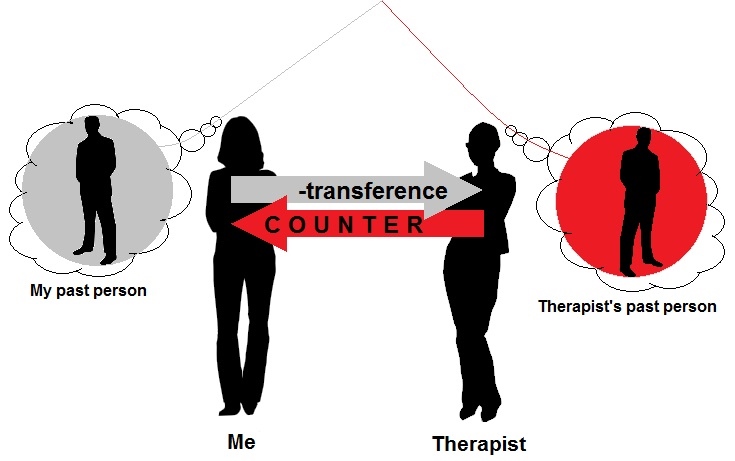
In the summer of 2020, during the Covid pandemic, Sam wanted to discuss our relationship. I objected, stating that our interactions were strictly professional. Despite this, she continued to insist on the existence of a relationship, referencing psychoanalytic concepts like transference and countertransference. One of the cruxes of this story is Sam's ability (or inability) to manage her own countertransference.

When is it ok for your therapist to tell you your marriage, which you're there in part to work on, is weak? When is it ok for her to suggest that you have an affair?

Everyone wonders what their therapist thinks of them. Mostly, we want to know if they think we're normal. Sometimes we want to know if we're their favorite patient. I now had some idea: she wanted me to like her.

Patients aren’t usually the authors of case studies, but I thought it was important to document how this happened, the impact these boundary violations had on me, and some of the flags I missed along the way.
 Boundary Violations in Psychotherapy - A Personal Case Study